


Introduction: Why You Should Start Technical Blogging
You are sitting in front of your laptop, switching between code, YouTube, and maybe a cup of coffee. Suddenly, a thought comes into your mind: “Should I start a technical blog?” This thought is very common, especially if you have recently finished a coding bootcamp or started learning development seriously. You might have seen other developers writing blogs, getting attention on LinkedIn, and even receiving job offers.

Technical blogging is not just about writing articles. It is about sharing your journey, your mistakes, and your solutions. Many beginners think they need to be experts before they start, but that is not true. In fact, beginners often write the most helpful content because they remember the problems clearly and explain them in a simple way.
The biggest problem is not starting. It is continuing. Many people write one or two articles and then stop because they feel their writing is not good enough or they are afraid of being judged. But the truth is very simple: people do not want perfect writing. They want real experiences and clear solutions. If your blog can help even one person solve a problem, then your blog is valuable.
Table Of Content
Step 1: Choose a Clear Niche
When you start technical blogging, the first thing you need to decide is your niche. Many beginners make the mistake of writing about everything. They write about programming, technology, AI, web development, and many other topics all at once. This creates confusion and makes it harder for readers to understand what your blog is about.
Instead of choosing a broad topic, you should focus on a specific area. For example, instead of writing about “JavaScript,” you can write about “JavaScript errors for beginners” or “React problems and fixes.” This makes your blog more focused and easier to rank on search engines.
A simple way to find your niche is to think about your recent learning experience. What problems did you face last week? What errors took your time? What new concept did you understand after struggling? These are perfect topics for your blog. When you write about real problems that you solved, your content becomes useful and relatable.
For example, if you recently fixed a Docker issue or solved a Git problem, you can write a detailed blog explaining that process. There are many beginners who are facing the same issue and searching for a solution online.

Step 2: Write Like a Human, Not a AI
One of the biggest mistakes in technical blogging is trying to sound too professional. Many beginners believe that using complex words and formal language will make their blog look better. But in reality, it makes the content harder to read and less engaging.
Instead of writing like a textbook, you should write like you are explaining something to a friend. Imagine you are talking to someone who is just starting and needs help. Use simple language, short sentences, and clear explanations.
For example, instead of writing, “This article demonstrates the implementation of a solution,” you can write, “This bug wasted my entire weekend, and here is how I fixed it.” The second version feels real and relatable.
A good technical blog usually follows a simple structure. First, you explain the problem clearly. Then you show the solution step by step. After that, you provide code examples if needed. Finally, you mention common mistakes or things to avoid. This structure makes your content easy to follow and helpful for readers.
Do not worry if your first blog is not perfect. Writing improves with practice. The more you write, the better you become.

Step 3: Choose the Right Platform
After deciding your niche and writing style, the next step is choosing where to publish your blog. There are many platforms available, and beginners often get confused.
If you want a simple and beginner-friendly option, WordPress is a good choice. It is easy to use and has many plugins for SEO and design. If you are a developer and prefer a more technical approach, you can use GitHub Pages with tools like Jekyll or Hugo. This option is free and gives you full control over your blog.
Another good option is platforms like Dev.to or Hashnode. These platforms already have an audience, so your blog can get visibility faster. You can also use them along with your personal website.
The most important thing is not the platform. It is your content. Do not spend too much time choosing themes or designing your site. Start simple and improve later.
Step 4: Set Up Your Blog Quickly
Many beginners waste weeks setting up their blog. They try different themes, plugins, and designs, and never actually start writing. This is a big mistake.
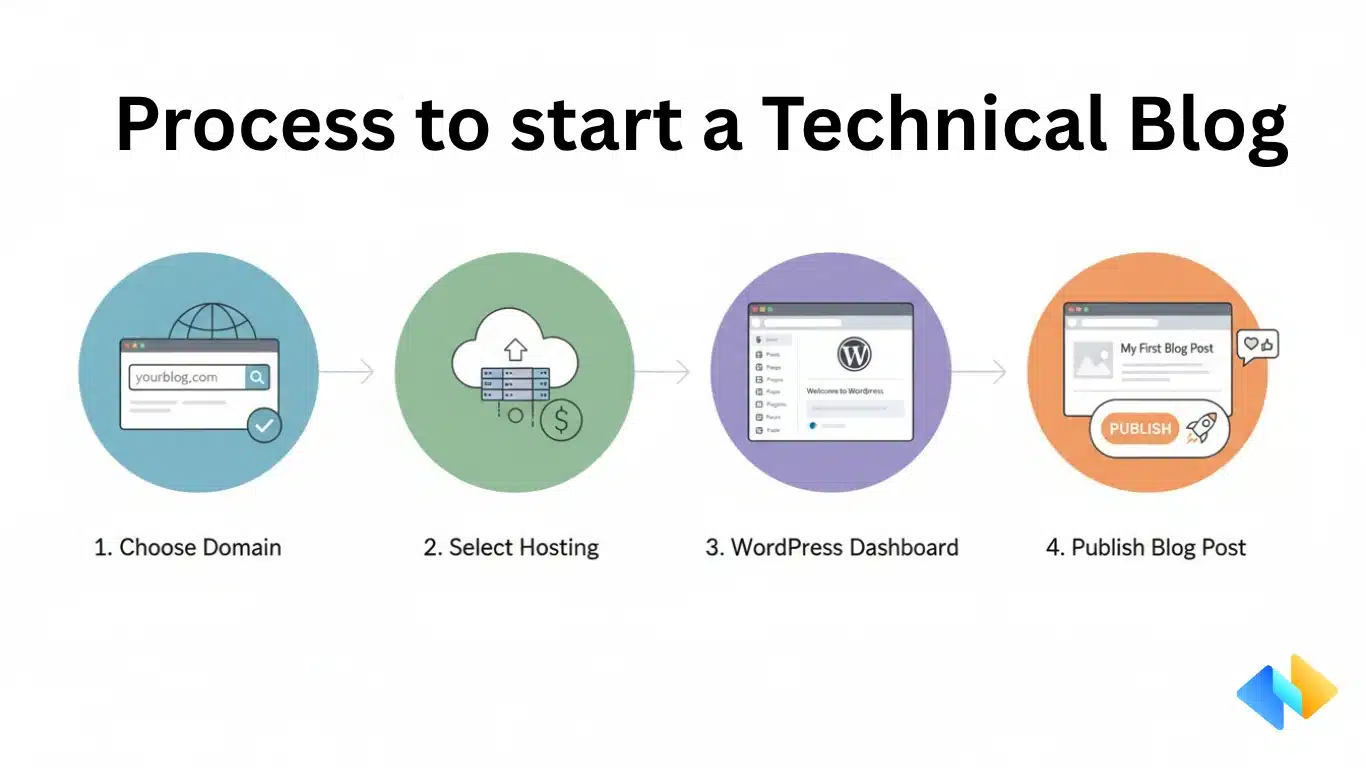
Your goal should be to set up your blog as quickly as possible and start publishing content. If you are using WordPress, you can buy a domain, get hosting, install WordPress, and choose a simple theme. Add a basic SEO plugin and a syntax highlighter for code.
If you are using GitHub Pages, create a repository, choose a theme, and start writing posts in Markdown. This setup is simple and free.
Remember, your blog does not need to be perfect. It just needs to be live.
Step 5: What Should You Write About
Many beginners struggle with content ideas. They think they need to create something unique or very advanced. But the best content ideas are usually simple and based on real experiences.
You can write about how you fixed a specific error, how you built a small project, or how you learned a new tool. You can also write about common mistakes that beginners make and how to avoid them.
For example, if you recently learned React, you can write a blog about the mistakes you made while learning React. If you fixed a Git issue, you can write a step-by-step guide explaining the solution.
The key is to write about what you know and what you experienced. Do not try to copy others or write about topics you do not understand.
Step 6: Basic SEO You Must Follow
SEO might sound complicated, but you only need to follow a few simple rules to get started. First, use your main keyword in the title, headings, and content naturally. Do not force it.
Second, use clear headings and subheadings. This helps both readers and search engines understand your content. Third, keep your paragraphs short and easy to read. Long paragraphs can make readers leave your blog.
You should also add internal links to your other blog posts. This helps improve your website structure and keeps readers engaged. Most importantly, write in simple English so that beginners can easily understand your content.
SEO is important, but it should not stop you from writing. Focus on helping people first.
Step 7: Promote Your Blog
Writing a blog is only half the work. You also need to promote it. Without promotion, your blog may not get any readers, even if the content is good.
You can share your blog on platforms like Dev.to, Reddit, Twitter, and LinkedIn. When you share your blog, do not just drop the link. Add some context. Explain what problem you solved and why your blog is helpful.
You can also write threads on Twitter or posts on LinkedIn to attract readers. Another good method is commenting on other blogs and helping people in developer communities.
The goal is to provide value, not spam. When people find your content helpful, they will naturally visit your blog.

Step 8: Stay Consistent
Consistency is the most important factor in blogging. Many people start with excitement but stop after a few weeks. This is why most blogs fail.
You do not need to post every day. Even one blog per week is enough if you stay consistent. Over time, your content will grow, and your traffic will increase.
In the beginning, you may not get many views. This is normal. Blogging is a long-term process. It may take a few months before you start seeing results.
Stay patient and keep writing.
Step 9: How to Make Money from Blogging
Once your blog starts getting traffic, you can monetize it in different ways. One common method is using ads like Google AdSense. In the tech niche, the cost per click is usually high, so you can earn a good amount with decent traffic.
You can also use affiliate marketing by recommending tools, hosting services, or courses. Another option is creating your own products like cheat sheets or courses.
Many developers also get freelance work or job offers through their blogs. Blogging helps you build authority and trust, which can open many opportunities.
Common Mistakes to Avoid
There are some common mistakes that you should avoid as a beginner. Do not try to be perfect. Your first blog will not be perfect, and that is okay. Do not copy content from others, as it will harm your blog in the long run.
Avoid writing overly technical content that beginners cannot understand. Also, do not ignore SEO completely. And most importantly, do not quit early.
Blogging takes time, but the results are worth it.
Final Thoughts: Just Start
Technical blogging is not about writing perfect articles or using difficult words. It is about sharing your knowledge and helping others. Your journey, your mistakes, and your solutions are valuable.
Your first blog may not be great. Your tenth blog will be better. Your fiftieth blog can change your career.
So stop overthinking. Pick one problem, write about it, and publish your first blog today.
The worst thing that can happen is you learn something new. The best thing that can happen is you build a strong personal brand and create new opportunities.
Start now. That is all you need to do.

Conclusion
Technical blogging is not about being the smartest developer in the room. It is about being the most helpful one. You do not need perfect English, big words, or years of experience to start. You just need honesty, consistency, and the willingness to share what you learn.
Every developer you follow today once started from zero. They also wrote imperfect blogs, faced confusion, and doubted themselves. The only difference is that they did not stop. They kept writing, improving, and learning with every post.
If you take one lesson from this guide, let it be this: start before you feel ready. Your first blog will not be perfect, and that is completely fine. What matters is that you begin. Over time, your writing will improve, your confidence will grow, and your blog will start getting attention.
Think of blogging as an investment. You may not see results immediately, but slowly it builds your knowledge, your skills, and your personal brand. One day, your blog can bring you opportunities you never expected, like freelance work, job offers, or even passive income.
So stop waiting for the “perfect time.” There is no perfect time. Open your laptop, pick a small problem you solved recently, and write your first blog.
Your journey starts now.
Frequently Asked Questions (FAQs)
1. Do I need to be an expert to start technical blogging?
No, you do not need to be an expert. Beginners often write better content because they explain things in a simple way that other beginners understand.
2. What should I write about in my first blog?
Write about a problem you recently solved. It can be a bug, an error, or something new you learned.
3. Which platform is best for beginners?
WordPress, Dev.to, and Hashnode are great for beginners. Choose one that feels easy to use and start writing.
4. How long should my blog post be?
A good blog post can be between 800 to 3000 words, depending on the topic. Focus on clarity and usefulness instead of length.
5. How often should I post blogs?
Posting once a week is enough if you stay consistent.
6. How can I get traffic to my blog?
Share your blog on platforms like LinkedIn, Twitter, Dev.to, and Reddit. Also, follow basic SEO practices.
7. Is SEO important for technical blogging?
Yes, SEO helps your blog appear in search results and bring organic traffic.
8. Can I earn money from technical blogging?
Yes, you can earn through ads, affiliate marketing, selling products, and freelance opportunities.
9. What if my writing is not good?
That is completely normal. Writing improves with practice. Focus on helping people instead of being perfect.
10. Should I use AI tools for blogging?
You can use AI for ideas and editing, but always add your personal experience and real examples.
11. How do I choose the right topic?
Pick topics based on your real experiences and problems you have solved.
12. Can I write about topics I am still learning?
Yes, in fact, it is one of the best ways to create beginner-friendly content.
13. How long does it take to see results?
It can take 3 to 6 months to start seeing traffic. Blogging is a long-term process.
14. Do I need a custom domain?
It is not necessary at the start, but having a custom domain looks more professional.
15. What is the biggest mistake beginners make?
The biggest mistake is quitting too early or trying to be perfect.
16. Should I focus more on writing or promotion?
Both are important. Write good content and also spend time promoting it.
17. Can blogging help me get a job?
Yes, many companies value developers who share knowledge and have a strong online presence.
18. What type of blogs perform best?
Step-by-step tutorials, problem-solving posts, and beginner guides perform very well.
19. Do I need coding knowledge to start?
Basic knowledge is enough. You can start blogging as you learn.
20. What is the most important tip for success?
Stay consistent and keep improving. Do not give up.
If you found this guide helpful, share it with other developers and start your blogging journey today.