

When I first started blogging, I thought writing good articles was enough. I believed that if I write helpful content, people will automatically come and read it. But honestly, that did not happen. I was publishing posts regularly, but my traffic was almost zero. It was very frustrating.
Then I realized something important — writing is only half the work, promotion is the other half.
That is where social media helped me a lot.
In this blog, I will share how I personally use social media to grow my blog, what problems I faced, and what actually worked for me. I will explain everything in simple English so that beginners can understand easily.
What is Social Media for Blogging?
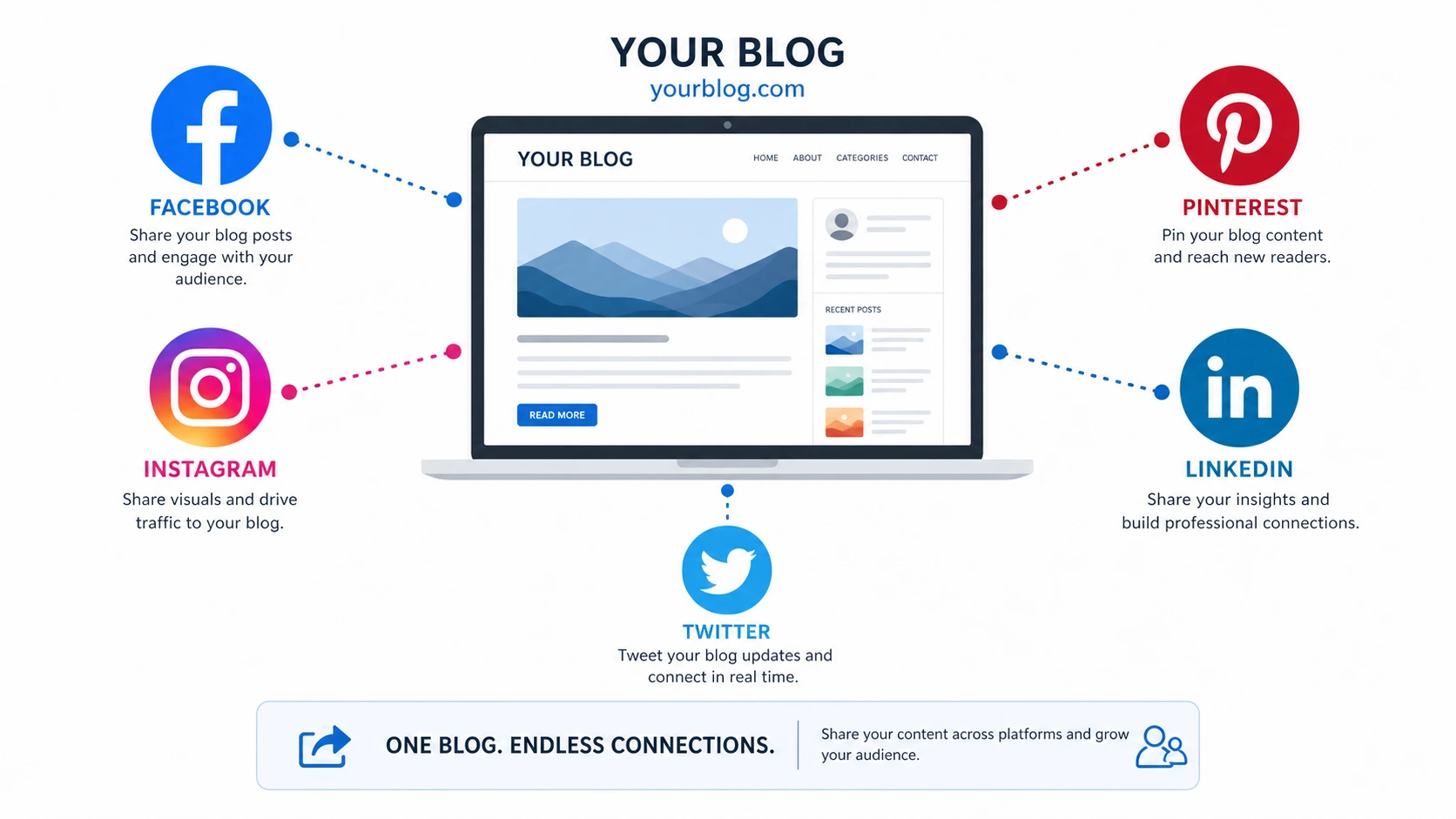
Social media means platforms like:
- Twitter (X)
Why Social Media is Important for Blog Growth
Let me be honest — without social media, my blog would not grow this much.
Here are some reasons why social media is important:
1. More Traffic
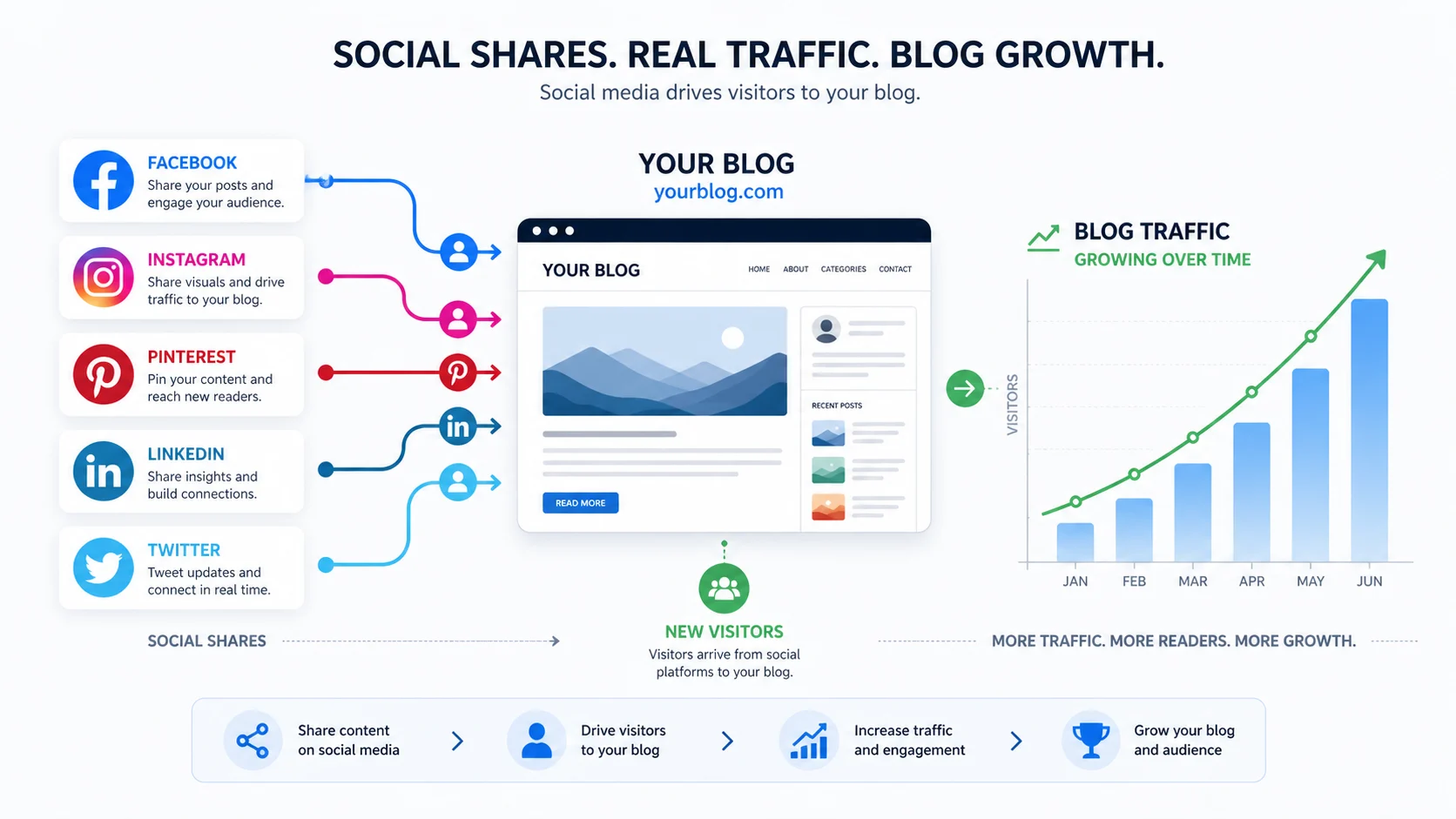
When I share my blog posts on social media, I get visitors instantly. This is something I didn’t experience when I relied only on SEO. Social media works fast because people are already active on these platforms and constantly looking at new content.
When I post my blog link with an interesting caption or helpful tip, some people click on it right away. Even if only a few people visit at first, it is still better than getting zero traffic. Over time, as I kept sharing regularly, more people started noticing my posts, and my blog traffic slowly increased. This made me realize that social media is one of the easiest ways to bring initial visitors to a new blog.
2. Build Audience
Social media helps in building a real audience, not just random visitors. When I post regularly and share useful content, people start recognizing my name and my blog. Some of them follow me, engage with my posts, and even wait for my new content.
This creates a connection, which is very important in blogging. Instead of depending only on search engines, I now have people who already trust my content. Slowly, this audience becomes loyal, and they visit my blog again and again whenever I share something new.
3. Faster Growth
One thing I learned from my experience is that SEO takes time, sometimes months, to show results. But social media can give faster growth if used properly. When a post performs well, it can bring traffic, followers, and engagement within a short time.
I have seen some of my posts getting attention within hours, which is something that rarely happens with SEO in the beginning. This quick response keeps me motivated and helps me understand what type of content people like. Because of this, social media became an important part of my growth strategy.
4. Free Promotion
The best part about social media is that it is completely free to start. I did not spend any money on ads in the beginning, yet I was able to promote my blog to many people. Platforms like Facebook, Instagram, and Pinterest allow you to share your content without any cost.
All you need is time, effort, and consistency. For beginners who don’t have a budget, this is very helpful. I was able to grow my blog step by step just by posting regularly and improving my content, without spending anything.
My Biggest Problem in the Beginning
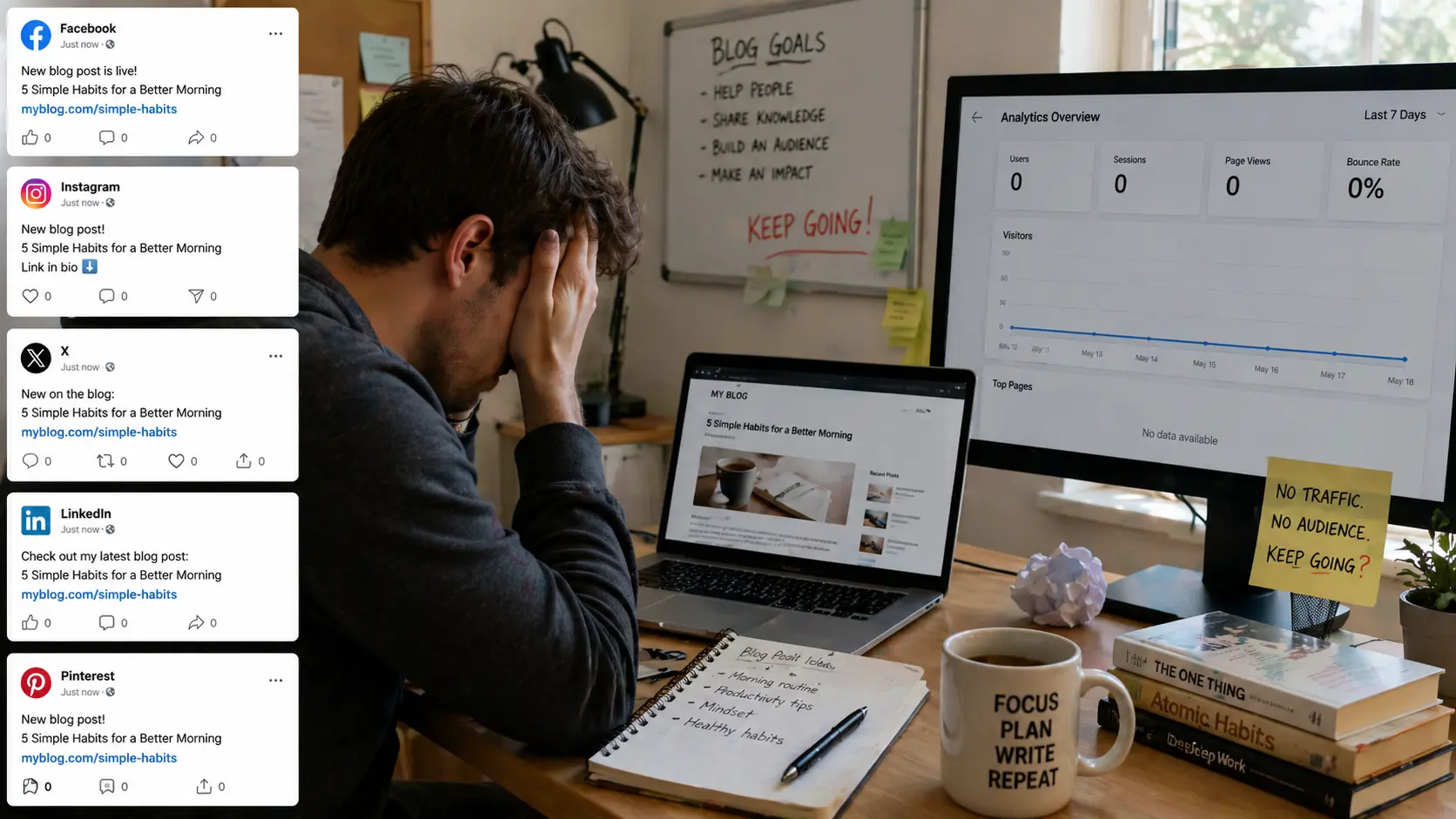
When I first started using social media for my blog, I faced many problems, and honestly, it was very confusing. I didn’t understand what kind of content I should post or how to attract people. Sometimes I would post my blog links directly, expecting people to click, but nothing happened. There were no likes, no comments, and no visitors coming to my blog. It felt like I was talking to no one.
Another big problem was that I didn’t have any strategy. I was posting randomly without any plan. Some days I would post a lot, and then I would disappear for many days. Because of this inconsistency, my accounts didn’t grow, and people didn’t notice my content. I also used to compare myself with others who already had many followers, which made me feel even more discouraged.
I also didn’t understand the importance of engagement. I thought social media was only about posting content, so I ignored comments and didn’t interact with other people. Because of this, I was missing the opportunity to build connections and grow naturally.
There were moments when I felt like giving up. I started thinking that maybe blogging and social media were not for me. But instead of quitting, I decided to learn from my mistakes. I started observing what successful creators were doing, tested different types of posts, and slowly improved my approach.
Over time, I realized that growth on social media does not happen instantly. It requires patience, consistency, and a clear strategy. Once I understood this, things slowly started getting better, and I began to see real progress.
Step-by-Step Guide to Use Social Media for Blog Growth
When I started, I was completely confused about how to actually use social media for blogging. I used to think just posting links is enough, but that didn’t work. Over time, I learned a simple step-by-step system that helped me grow slowly but steadily. I’ll share that here so you don’t repeat my mistakes.
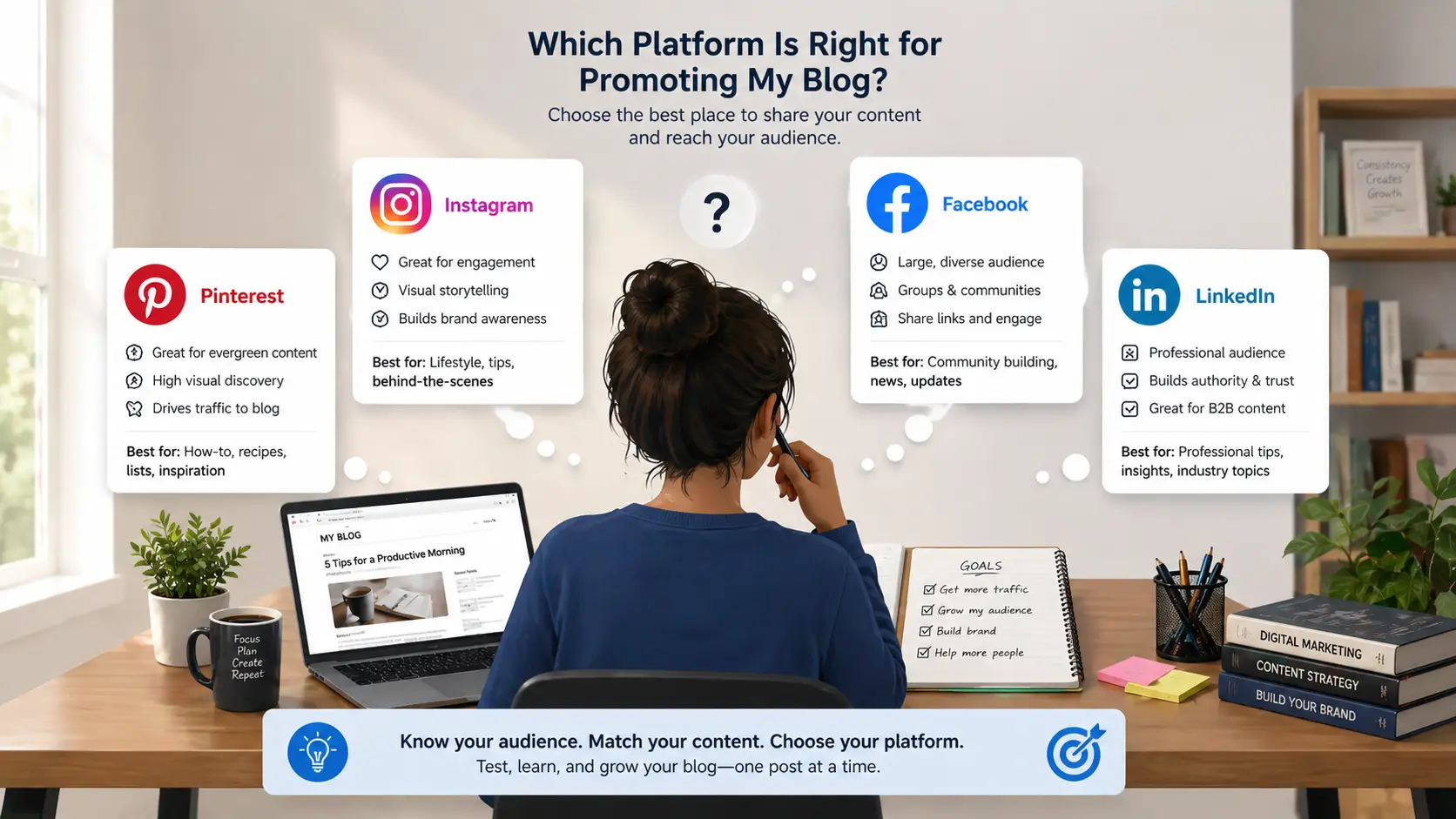
Step 1: Choose the Right Platform
In the beginning, I made a big mistake by trying to be active on every platform. I created accounts everywhere and tried to post daily, but it became very stressful and confusing. I couldn’t stay consistent, and my energy was divided.
Then I realized it’s better to focus on fewer platforms and do them properly.
Now I mainly focus on 2–3 platforms where my audience is active. For beginners, I suggest starting with platforms that are easier for blog promotion. For example, Pinterest is great for driving traffic, Instagram is good for engagement and building a personal brand, and Facebook groups can help you connect with people in your niche.
Starting small helps you stay consistent and learn faster without feeling overwhelmed.
Step 2: Create a Professional Profile
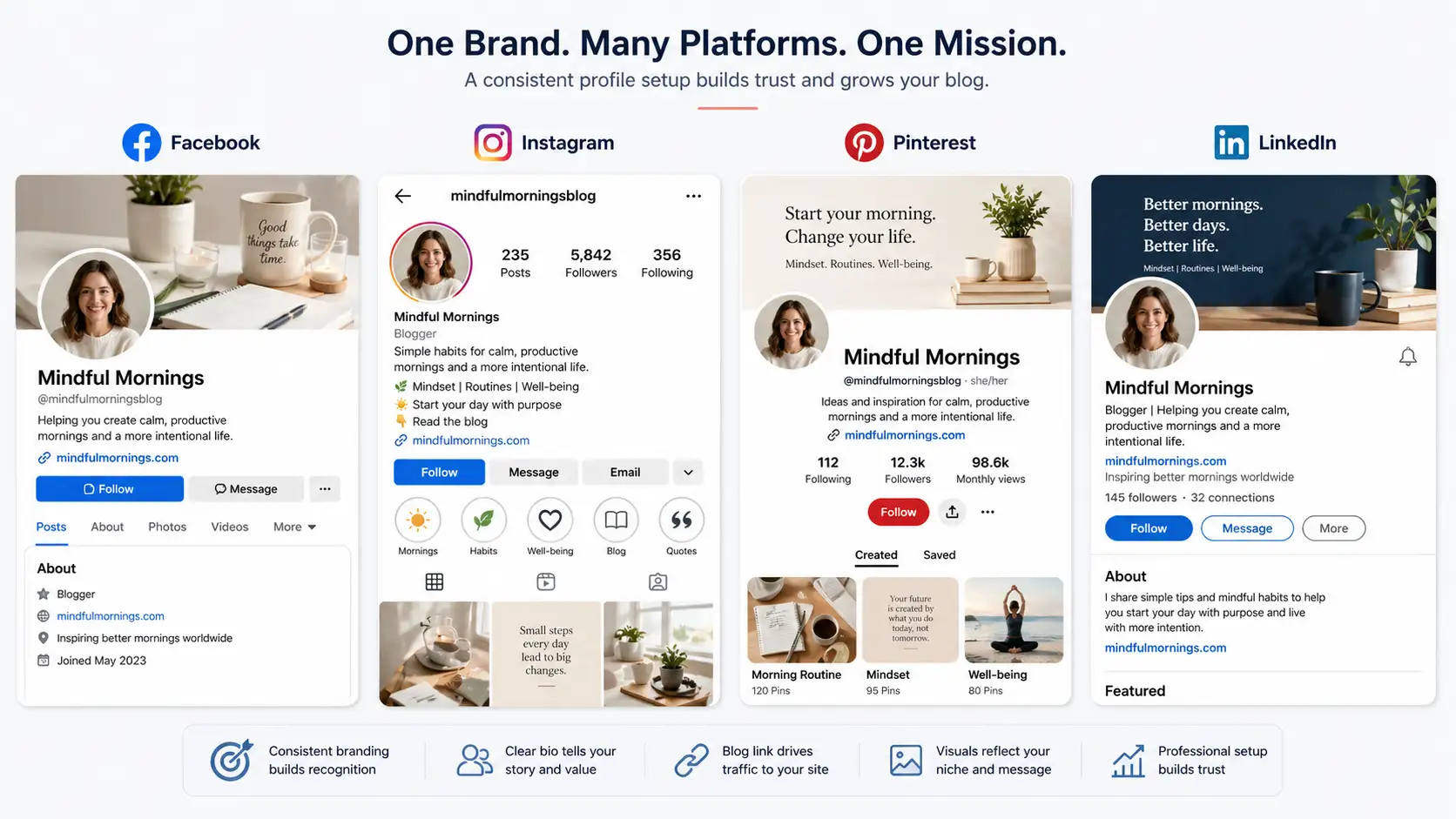
Your social media profile is like your first impression. When someone visits your profile, they should quickly understand who you are and what your content is about.
Earlier, I used random usernames, no proper profile picture, and no clear bio. Because of that, people didn’t take my account seriously.
Now I keep everything simple and clear. I use the same username across platforms so people can recognize me easily. I add a clean profile picture, write a short bio explaining what I do, and include my blog link.
A simple and clear profile builds trust and makes people more likely to follow you.
Step 3: Share More Than Just Links
This was one of my biggest mistakes. I used to only post my blog links again and again. But people don’t open social media just to see links — they want value, entertainment, or learning.
Now I follow a simple rule: give value first, promote later.
Most of my posts are helpful or interesting content taken from my blog. I share tips, small lessons, personal experiences, mistakes I made, or quick guides. Then sometimes, I include my blog link for those who want to learn more.
This approach works much better because people start trusting your content before clicking your links.
Step 4: Use Attractive Content
Social media is very fast. People scroll quickly, and if your content doesn’t catch attention in a few seconds, they will ignore it.
I learned this after many of my posts got no response.
Now I focus on making my content simple and attractive. I write short and clear sentences, use strong and interesting titles, and sometimes add images or simple graphics. Even small changes in how you present your content can make a big difference.
For example, instead of writing a boring title, I try to make it more engaging and curiosity-based. This increases the chances of people stopping and reading my post.
Step 5: Be Consistent (Very Important)
Consistency was one of my biggest struggles in the beginning. Some days I posted a lot, and then I would disappear for many days. Because of this, my growth stopped again and again.
Later, I understood that consistency is more important than posting too much.
Now I follow a simple routine. I try to post at least once daily or a few times every week. Even if the content is simple, I stay consistent.
When you post regularly, people start seeing your content more often, and platforms also start promoting your posts more. Over time, this builds trust and helps your account grow steadily.
Step 6: Engage With People
At first, I thought social media was only about posting content. I didn’t reply to comments, and I didn’t interact with others. This was a big mistake.
Social media is about being social.
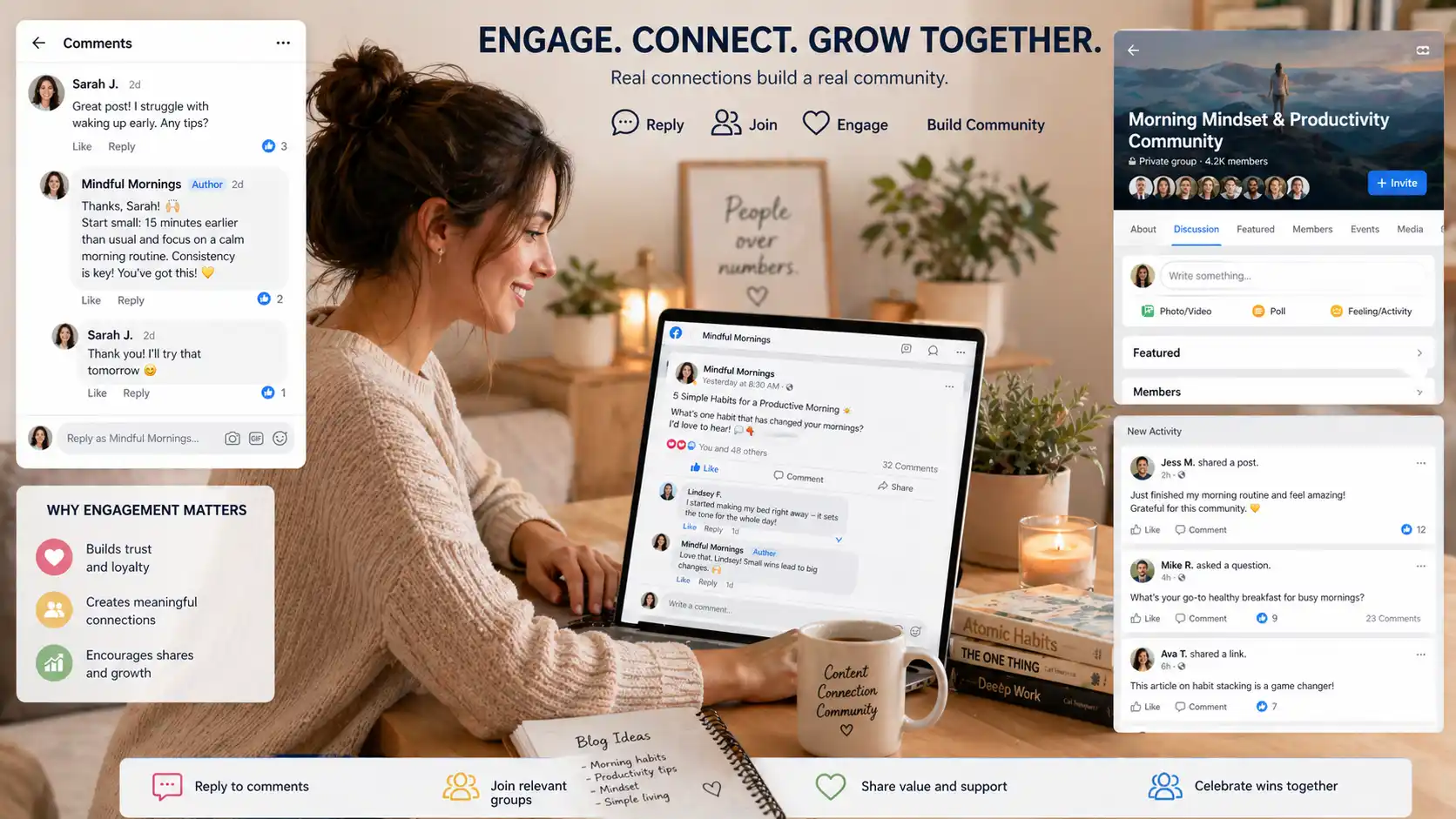
Now I make sure to reply to comments, like other people’s posts, and leave meaningful comments on similar pages. I also respond to messages whenever possible.
This helps me build real connections with people. When you engage with others, they are more likely to support you, follow you, and visit your blog.
Step 7: Join Groups and Communities
Joining communities helped me a lot in my early days.
There are many groups, especially on Facebook, where people share ideas, ask questions, and help each other. I joined blogging and niche-related groups where my target audience was active.
Instead of just promoting my blog, I focused on helping people. I answered questions, shared my experiences, and gave simple advice. Sometimes, when it was relevant, I shared my blog link.
This approach helped me gain trust and also brought some traffic to my blog without spamming.
Step 8: Use Hashtags Properly
Earlier, I used hashtags randomly without understanding how they work. Because of that, my posts were not reaching the right audience.
Now I use a mix of different types of hashtags — small, medium, and sometimes trending ones. This helps my content reach more people who are interested in my topic.
Hashtags act like a discovery tool. When used properly, they can bring new people to your content who don’t follow you yet.
Step 9: Repurpose Your Blog Content
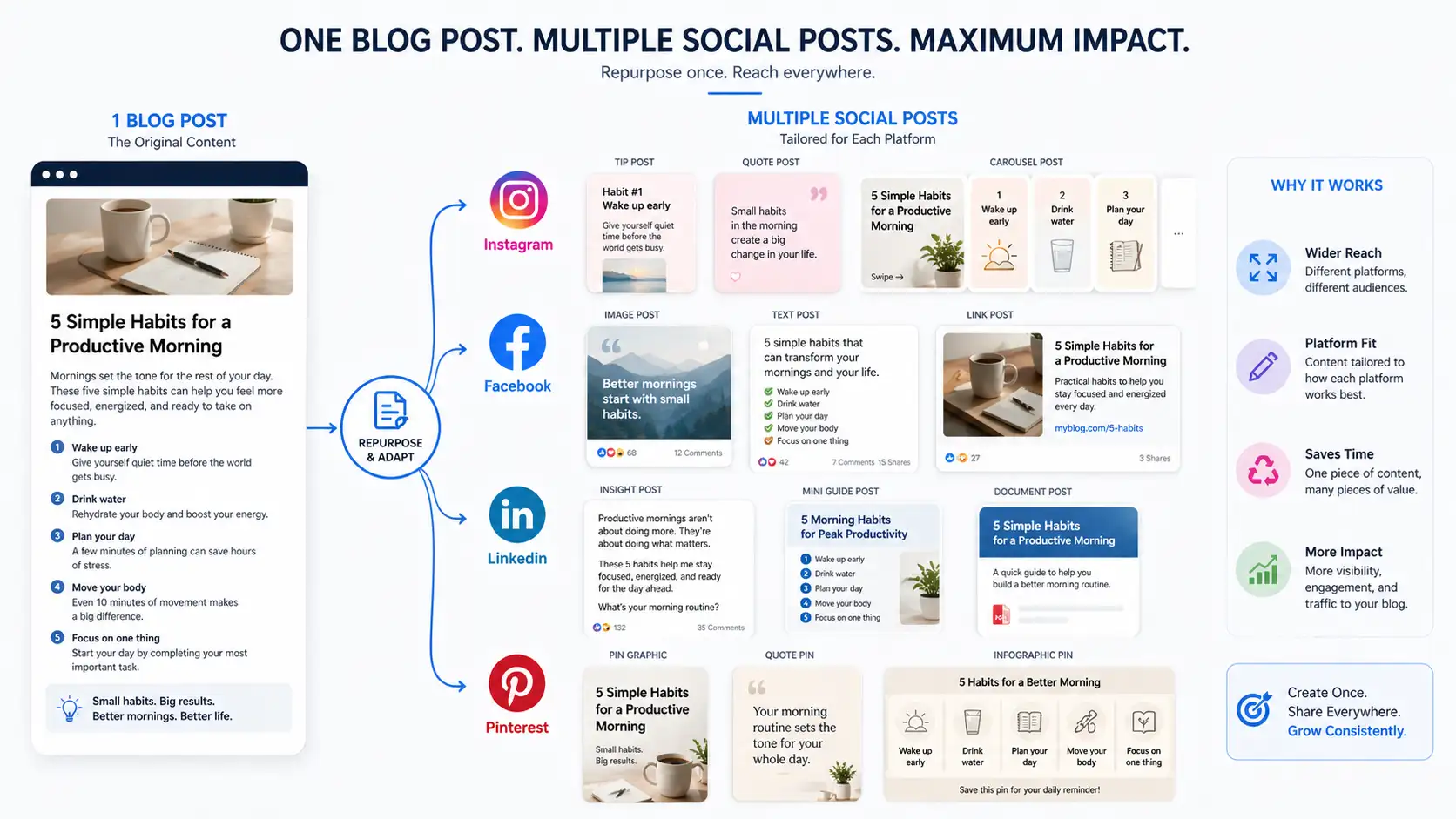
One smart strategy that helped me save time is repurposing content.
Instead of creating new content every time, I take one blog post and turn it into multiple social media posts. For example, I can break one article into small tips, quotes, or mini-guides and share them separately.
This way, one blog post gives me many pieces of content. It saves time, keeps my accounts active, and increases my reach across platforms.
Step 10: Track Your Results
In the beginning, I never checked what was working and what was not. I was just posting blindly.
Now I pay attention to my results. I check which posts get more likes, comments, shares, and clicks. I also notice what type of content people enjoy the most.
This helps me improve over time. I focus more on what works and stop wasting time on things that don’t.
Tracking results is very important because it helps you grow smarter, not just harder.
My Real Growth Experience
Let me be completely honest about my journey, because I know many beginners go through the same phase.
In my first month of blogging, I was very motivated. I wrote articles regularly and felt proud of my work. But the reality was disappointing. I was getting almost no traffic. Sometimes, I would check my blog stats again and again, hoping to see visitors, but the numbers were close to zero. It felt like all my effort was going to waste.
When I started using social media, I expected quick results. But even there, things didn’t change immediately. My posts were getting very few likes, sometimes none at all. Nobody was commenting, and most importantly, nobody was clicking on my blog links. It felt like I was invisible.
There were moments when I seriously thought about quitting. I started doubting myself and wondered if blogging was really for me. Seeing others grow faster made it even more frustrating.
But instead of giving up, I decided to change my approach. I stopped focusing only on results and started focusing on learning. I improved my content, made my posts more helpful, and tried to understand what people actually wanted to see. I also became more consistent and started engaging with others instead of just posting and leaving.
After about 2 to 3 months of doing this regularly, I started noticing small changes. My posts began getting a few likes and comments. Some people started following me. Most importantly, I finally started getting clicks on my blog links.
It wasn’t a huge success overnight, but it was real progress.
Slowly, my traffic increased. Instead of zero visitors, I started getting daily clicks. Some people even came back to read my new posts. That feeling was very motivating because it showed me that my efforts were working.
What I learned from this experience is that growth takes time. Social media is powerful, but it is not magic. You need patience, consistency, and a willingness to improve.
Today, I may not be at a very big level, but I am far ahead of where I started. And that progress came step by step, not overnight.
Common Mistakes to Avoid
When I started using social media for my blog, I made many mistakes that slowed down my growth. If you avoid these, you can save a lot of time and effort.
1. Posting Only Links
One of my biggest mistakes was posting only blog links again and again. I thought people would click and read, but most of them ignored my posts. The truth is, people don’t like direct promotion all the time. They come to social media to learn something, get inspired, or be entertained. Now I focus on sharing useful content first, and only sometimes promote my blog. This builds trust and increases the chances of getting clicks.
2. Giving Up Early
In the beginning, I expected fast results. When I didn’t see growth in a few days or weeks, I felt like quitting. This is a common mistake. Social media growth takes time, especially for beginners. If you stop too early, you never give yourself a chance to grow. I learned that patience is very important. Consistent effort over time gives real results.
3. Ignoring Audience
Earlier, I treated social media like a one-way platform where I only posted content and left. I didn’t reply to comments or interact with people. Because of this, I missed the chance to build connections. Now I understand that engagement is very important. When you reply to comments, answer questions, and interact with others, people feel connected to you. This helps in building a loyal audience.
4. Copying Others
At one point, I tried to copy what successful creators were doing. I used similar styles and ideas, but it didn’t work well for me. People can easily notice when content is not original. Instead of copying, it’s better to learn from others and then create your own unique style. Sharing your personal experience makes your content more real and relatable.
5. Not Being Consistent
Inconsistency was one of the main reasons my growth was slow. I used to post a lot for a few days and then stop completely. This breaks your momentum and reduces visibility. Social media platforms prefer active users. Now I focus on staying consistent, even if I post less. Regular posting builds trust and helps in long-term growth.
Best Content Ideas for Social Media
If you ever feel confused about what to post, don’t worry — I had the same problem. Over time, I found some simple content ideas that work very well for blog growth.
One of the easiest ideas is sharing tips from your blog. You can take small points from your article and turn them into short posts. This gives value to your audience and also promotes your blog indirectly.
Another powerful idea is “How I did this” posts. People love real experiences. When you share your journey, steps, or results, it feels more genuine and relatable.
You can also share your mistakes and lessons. This type of content builds trust because people see that you are honest and learning, just like them.
Before-and-after results are also very engaging. For example, showing your growth or progress can inspire others and attract attention.
Mini guides or quick tutorials work very well too. These are short, easy-to-understand posts that solve a small problem. People love content that is simple and useful.
Lastly, asking questions to your audience is a great way to increase engagement. It encourages people to comment and interact with your content, which helps your posts reach more people.
SEO Tips for Social Media Blog Growth
Many beginners think SEO is only for blogs or websites, but social media also plays an important role in it.
One important tip is to use keywords in your posts and captions. When you write about topics people are searching for, your content becomes easier to discover.
Adding your blog link in your profile bio is also very helpful. This way, anyone who visits your profile can easily access your blog.
Writing clear and attractive titles is another key factor. Titles not only help in grabbing attention but also improve visibility when people search for similar content.
Sharing your content regularly also helps. When your blog gets consistent traffic from social media, it sends positive signals and shows that your content is active and useful.
Most importantly, focus on creating quality content. If your content is helpful and valuable, people will engage with it, share it, and visit your blog. This indirectly supports your SEO.
From my experience, social media and SEO work best when used together. Social media brings quick traffic, while SEO builds long-term growth.
Tools I Personally Use
When I started blogging and using social media, I was doing everything manually. It took a lot of time, and sometimes I felt tired and confused. Later, I discovered some simple tools that made my work much easier and faster.
- Canva → for designs
- Google Trends → for ideas
- Scheduling tools → to plan posts
One of the main tools I use is Canva. It helps me create simple and attractive designs for my social media posts. Even if you are not a designer, you can easily make good-looking images using ready-made templates. This improves the quality of your content and makes it more eye-catching.
Another tool I use is Google Trends. This helps me find what topics people are searching for. When I know what is trending, I can create content that people are already interested in. This increases the chances of getting more traffic and engagement.
I also use scheduling tools sometimes. These tools allow me to plan my posts in advance. For example, I can create content for a few days and schedule it, so it gets posted automatically. This saves time and helps me stay consistent even when I am busy.
You don’t need too many tools in the beginning. Just a few simple tools are enough to manage your work and improve your results.

My Daily Routine (Simple)
I believe in keeping things simple. In the beginning, I tried to do too much, and it only made me tired. Now I follow a basic routine that is easy to manage and effective.
Most days, I focus on creating or improving one blog post. Sometimes I write a new article, and sometimes I update an old one to make it better.
After that, I create 2–3 social media posts from that blog content. These can be tips, small points, or short summaries. This way, one blog post gives me multiple pieces of content.
I also spend around 20–30 minutes engaging with people. I reply to comments, like posts, and interact with others in my niche. This helps me build connections and grow my audience.
This simple routine keeps me consistent without feeling overwhelmed. You don’t need to work all day — just focus on doing small tasks regularly.
Final Thoughts
If you are just starting your blogging journey, it’s completely normal to feel confused or frustrated. I went through the same phase, and it wasn’t easy in the beginning.
Social media may look simple from the outside, but using it effectively takes time and learning. You might not see results immediately, and sometimes it may feel like nothing is working. But that doesn’t mean you are doing it wrong.
The most important thing is to keep going. Focus on sharing value, improving your content, and staying consistent. Don’t worry about perfection. Even small progress matters.
From my experience, social media can truly change your blogging journey if you use it the right way. It helps you connect with real people, build an audience, and bring traffic to your blog.
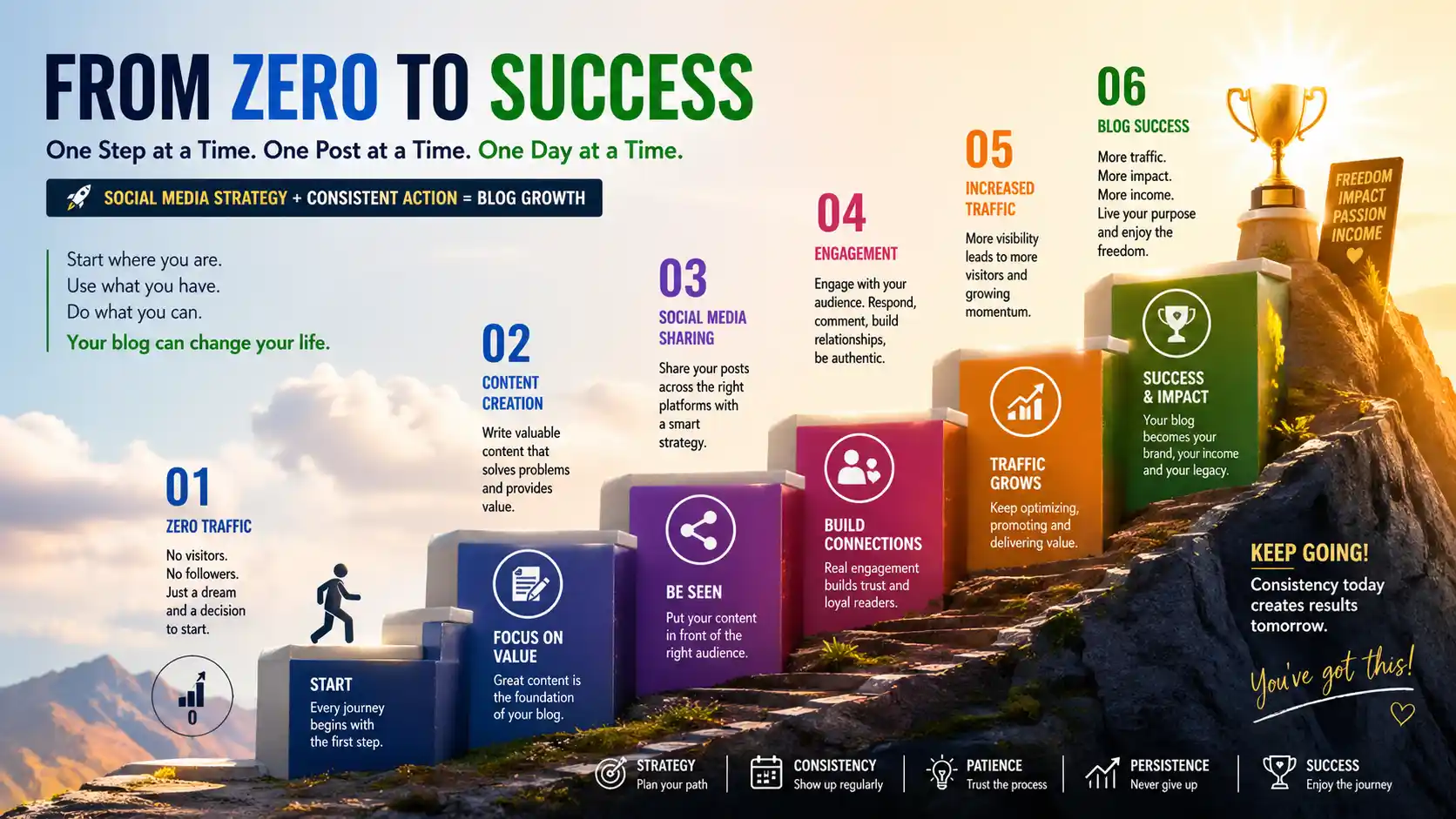
Just start where you are, use what you have, and keep learning every day.
Conclusion
Using social media for blog growth is not difficult, but it does require patience, consistency, and the right approach.
From my personal experience, I learned that success doesn’t come overnight. It comes from small efforts done regularly. When you focus on providing value, engaging with people, and staying consistent, you slowly start seeing results.
You don’t need to be an expert or have perfect content to begin. Start small, choose the right platforms, and keep improving step by step.
Always remember:
- Start simple
- Stay consistent
- Focus on helping others
- Learn from your mistakes
And most importantly, don’t give up. Growth takes time, but if you stay committed, you will definitely see progress.
Frequently Asked Questions
1. Is social media really important for blog growth?
Yes, social media is very important for blog growth. It helps bring quick traffic, build an audience, and promote your content for free. In the beginning, it can give you visibility faster than SEO alone.
2. Which social media platform is best for beginners?
For beginners, Pinterest, Instagram, and Facebook are the most useful platforms. Pinterest is great for traffic, Instagram helps with engagement, and Facebook groups help you connect with targeted audiences.
3. How often should I post on social media for my blog?
You don’t need to post too much. Even 1–2 posts daily or 4–5 posts per week is enough if you are consistent. Regular posting is more important than posting a lot at once.
4. Do I need to spend money on ads to grow my blog?
No, you don’t need to spend money in the beginning. You can grow your blog using organic methods like sharing useful content, engaging with people, and using the right hashtags.
5. Why am I not getting traffic even after posting on social media?
This usually happens when content is not engaging or only links are being shared. Social media users prefer value-based content. You need to share tips, ideas, or useful posts instead of only promoting your blog.
6. How long does it take to see results from social media?
It depends on your consistency and content quality. Some people may see small results in a few weeks, but real growth usually takes 2–3 months of regular effort.
7. Should I only focus on one social media platform?
Yes, it is better to start with 1–2 platforms instead of trying everything. Once you grow and understand how things work, you can expand to other platforms.
8. Can social media help in getting Adsense approval?
Yes, indirectly it can help. If your blog gets traffic from social media and looks active, it improves your chances of getting Adsense approval.
9. What type of content works best on social media for blogs?
Helpful tips, personal experiences, mini guides, mistakes, and “how-to” posts work very well. Content that provides value or solves problems gets more engagement.
10. Do I need advanced tools to grow my blog on social media?
No, you don’t need advanced tools. Simple tools like Canva for design and Google Trends for ideas are enough when you are starting out.